
On 2 July 2026, partners from the WASA projects WaReNam, WaMiSAR and MAMDIWAS came together in Frankfurt for a joint exchange meeting hosted by the Institute for Social-Ecological Research (ISOE). Initiated by the principal investigators of the three projects, the meeting provided an important platform for strengthening collaboration, sharing experiences and identifying opportunities for closer cooperation across the WASA programme.
Beyond presenting their individual activities and getting to know each other’s work in greater detail, the participants focused on identifying project-spanning topics that could be pursued through future collaboration. As the MAMDIWAS team explained, “our main motivation was to identify potential synergies between the different WASA projects and to create a space for exchanging ideas and experiences.” The meeting also created an opportunity to openly discuss both successful approaches and implementation challenges, fostering mutual learning across the projects.
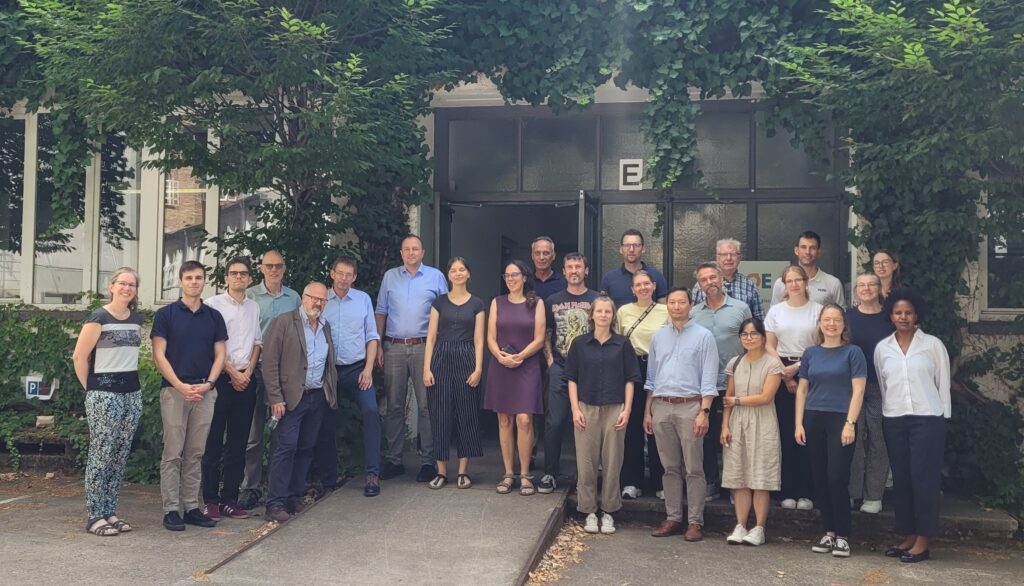
The WaMiSAR team shared a similar perspective, emphasizing that the exchange was an excellent opportunity to learn from colleagues’ field experiences, strengthen relationships with project partners and explore future collaborations. “From the outset, the motivation was to bring together researchers working on related challenges, exchange experiences, and explore opportunities for joint activities that would maximize the impact of our collective efforts and resources”, Lara Stelmaszyk (TZW) and Teba Gil Diaz (AGW) from the WaMiSAR team noted.
Several concrete ideas for collaboration emerged during the discussions. Participants explored how treatment processes developed in WaMiSAR and MAMDIWAS could complement one another, discussed opportunities to jointly develop guidelines on topics such as irrigation with treated mine water, and identified the potential for sharing water quality data and preparing joint scientific publications.
For MAMDIWAS, the exchange on monitoring approaches, implementation challenges and practical experiences from different case studies was particularly valuable. According to the project team, “the lessons learned from applied research in Southern Africa provided useful insights into context-specific solutions, implementation barriers, and opportunities for improving project outcomes.” WaMiSAR likewise highlighted the benefits of discussing fieldwork logistics, analytical methods and monitoring activities across the projects, which revealed both shared challenges and complementary expertise.
A recurring theme throughout the meeting was water reuse, identified as the key cross-cutting topic connecting all three projects. While each project addresses different aspects of water reuse, together they cover a broad spectrum of expertise. One concrete opportunity identified during the meeting was closer collaboration on regulations and water quality standards for different water reuse applications. In addition, individual WaMiSAR partners identified opportunities to contribute their expertise to research activities beyond the immediate scope of their own project, laying the foundation for future joint initiatives.
Beyond the technical discussions, the meeting demonstrated how project-to-project exchange strengthens the overall WASA programme. As the MAMDIWAS team reflected, “by creating synergies between the locally investigated case studies in multiple Southern African countries, common barriers and solutions can be identified, while also demonstrating the transferability of WASA results.” WaMiSAR added that such exchanges help promote harmonized approaches across projects by encouraging discussions on monitoring methodologies and regulatory frameworks, ultimately improving the comparability of results and strengthening the programme’s long-term scientific impact.
The productive discussions have already inspired the next steps. The three projects plan to continue the exchange with a follow-up meeting in early 2027, hosted by MAMDIWAS in Duisburg/Essen. Participants also discussed organising a WASA Summer School on water reuse in Namibia in October 2026. Bringing together expertise from across the programme, the Summer School would offer participants an integrated perspective on water availability, monitoring, groundwater and surface water systems, and water treatment, while further strengthening collaboration within the growing WASA community.