
During a trip to Namibia in June 2026, a delegation of WaReNam partners from the Institute for Social-Economic Research (ISOE), the Technical University of Darmstadt (TUDa), and the Emschergenossenschaft-Lippeverband (EGLV) advanced the establishment of a Multi-Scale Water Reuse Strategy for Namibia together with local stakeholders. The visit enabled progress in pilot plant development, capacity building, and stakeholder engagement. Furthermore, the exchange between Namibian and German WaReNam partners helped identify and overcome current project bottlenecks.
The first key event was the seventh WaReNam consortium meeting in Windhoek. The project partners shared updates and discussed cross-cutting activities. The meeting enabled the identification of current challenges and provided a roadmap for the remaining project year. Bringing together WaReNam partners facilitated a dialogue for the successful synthesis of project outcomes.
Moreover, the third roundtable discussion brought together a diverse range of stakeholders in Windhoek, including representatives from the landscaping, agricultural, and industrial sectors, as well as researchers. The participants discussed proposed regulatory requirements, monitoring, and compliance practices. The roundtable discussion represented a major step in improving and developing a Namibian National Water Reuse Policy by identifying the challenges and necessities.
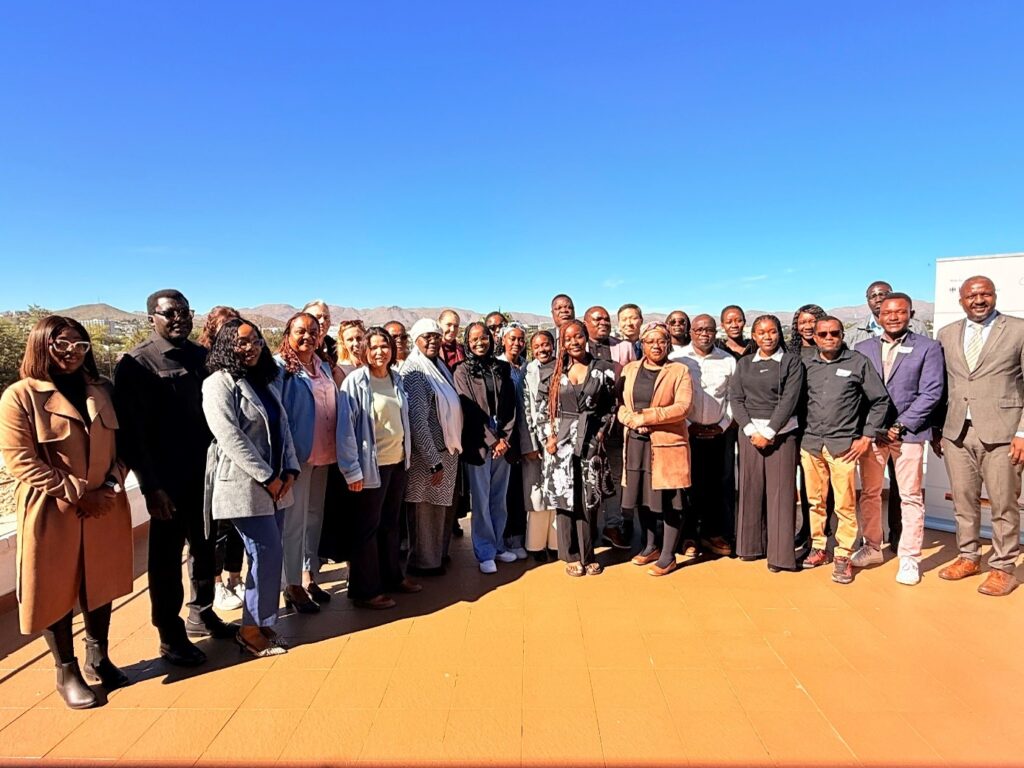
From 15–19 June 2026, the WaReNam project partners of Emschergenossenschaft-Lippeverband (EGLV) and NamWater Human Resource Development Centre (HRDC) conducted a one-week training on fundamentals of wastewater treatment and water reuse in Okahandja, with practical training sessions in Windhoek.
The thirty participants from the seven Namibian municipalities Erongo, Khomas, Ohangwena, Omusati, Oshana, Oshikoto, and Otjozondjupa, as well as personnel from NamWater brought diverse levels of experience and expertise in water and wastewater treatment. EGLV trainers Bastian Ballin and Sven Ole Gonschor effectively addressed these varying backgrounds through adaptive, interactive theoretical and practical training programmes.
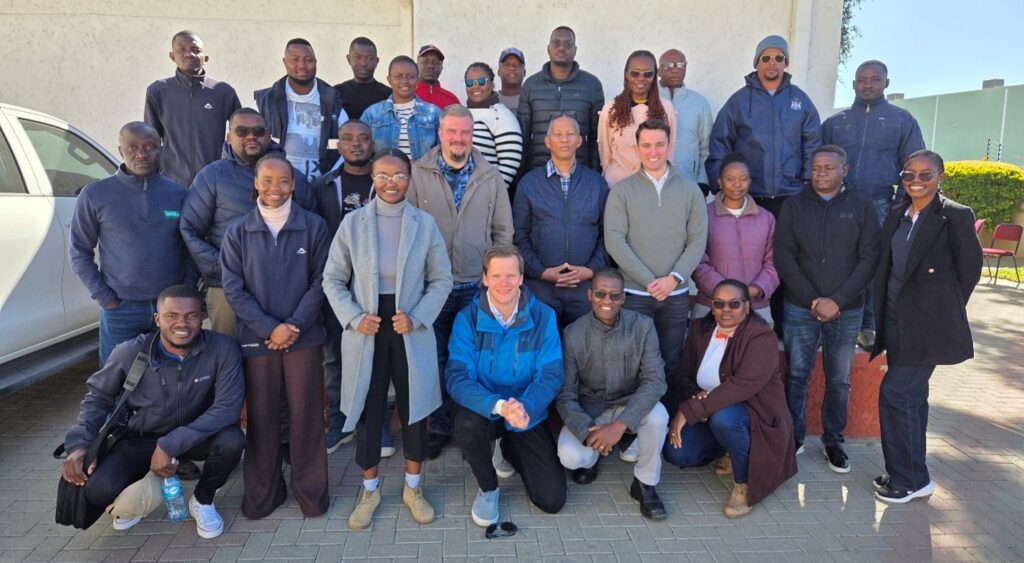
The theoretical training formed the introduction into the training week. Within these sessions, the participants could deepen their knowledge on wastewater treatment through targeted sessions ranging from wastewater characteristics, preliminary and secondary treatment, activated sludge treatment, hygiene and safety standards, enriched with insights into German large-scale wastewater treatment plant operations of EGLV in western Germany. A tailored session on waste stabilisation ponds (WSPs) gave the participants in-depth technical and operational knowledge on the most common wastewater treatment method in Namibia.
The theoretical sessions were supplemented by a site visit to the Goreangab Water Reclamation Plant in Windhoek, which is operated by Wingoc. The team around Thomas Honer and Siegfried Müller gave the group an introduction into the operations and use cases of direct potable reuse in Windhoek. The participants learned about the different treatment technologies, quality and safety standards, and the technology involved. A guided tour around the plant made the daily operations with all the treatment steps, maintenance, and control mechanisms tangible and rounded up a successful excursion to the world’s oldest direct potable reuse facility.
After the initial insights into water reuse operations at the Goreangab Water Reclamation Plant, Stephan Sander (EGLV) and Sophia Keller (ISOE) conducted an interactive working session on future operator models for broad-scale water reuse in Namibia. The participants were introduced to three suggested scenarios on how responsibilities for operation and maintenance of advanced wastewater treatment and water reuse could be designed. Following discussions in working groups provided valuable situated knowledge and first-hand insights. The findings are beneficial to the WaReNam research project and, ultimately, contribute to recommendations for the development of a Namibian National Water Reuse Policy through the Ministry of Agriculture, Fisheries, Water and Land Reform (MAFWLR).
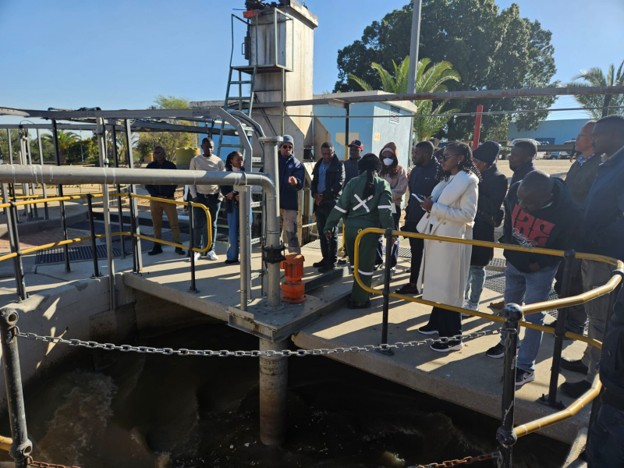
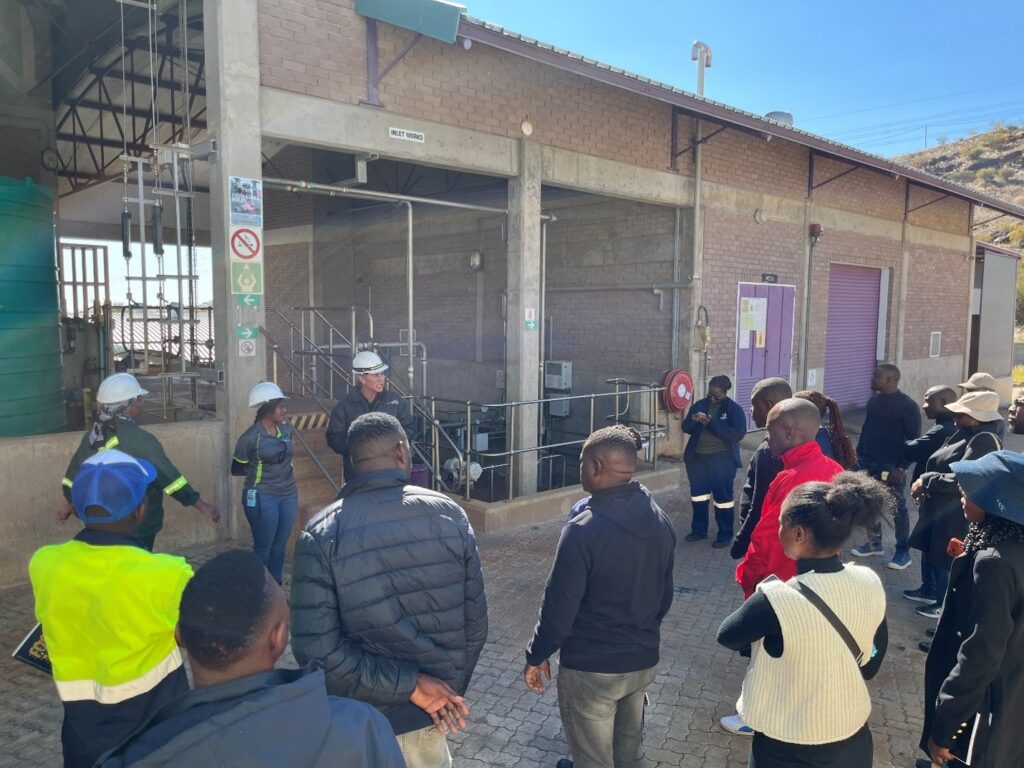
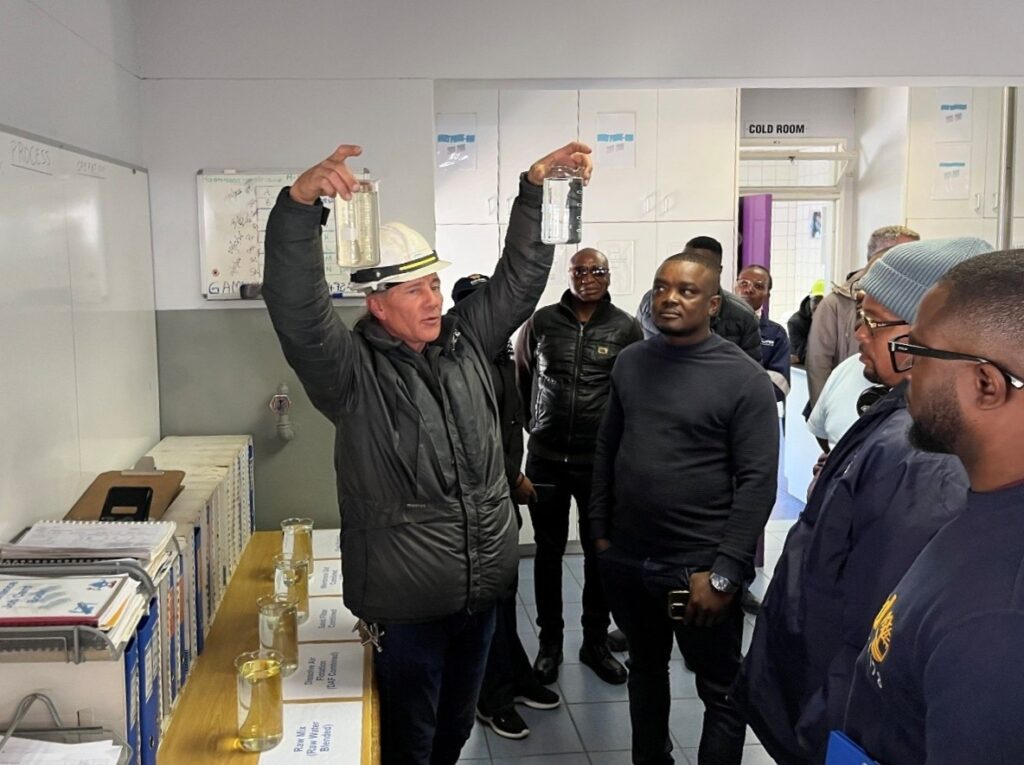
Two days of practical training completed a successful training endeavour. At Windhoek’s Gammams Wastewater Treatment Plant – Namibia’s largest municipal wastewater treatment plant – participants learned about the typical treatment stages for wastewater and sludge treatment. Practical tests to determine sludge parameters and an interactive training session were conducted on site. On the final day of the training, participants gained hands-on experience in analysing key wastewater parameters.
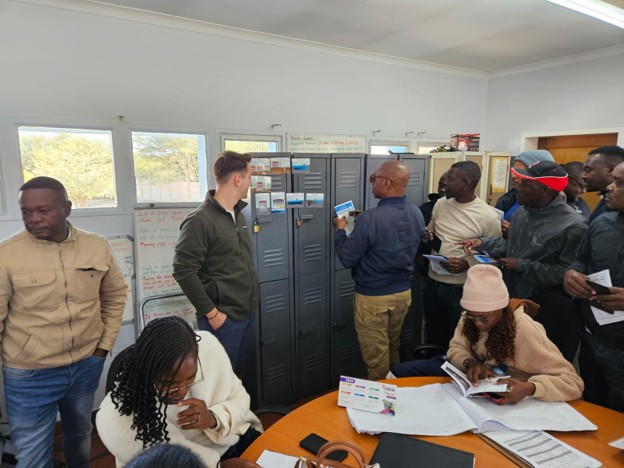
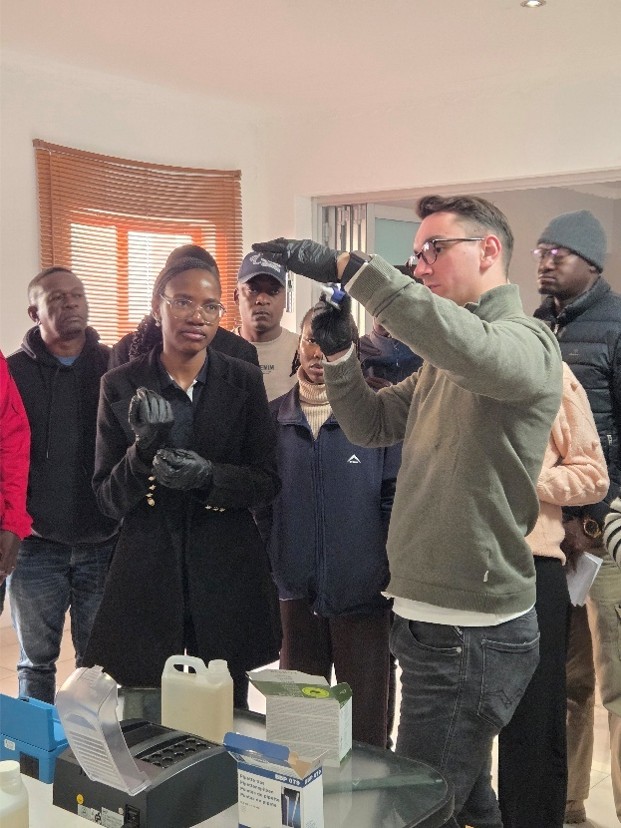
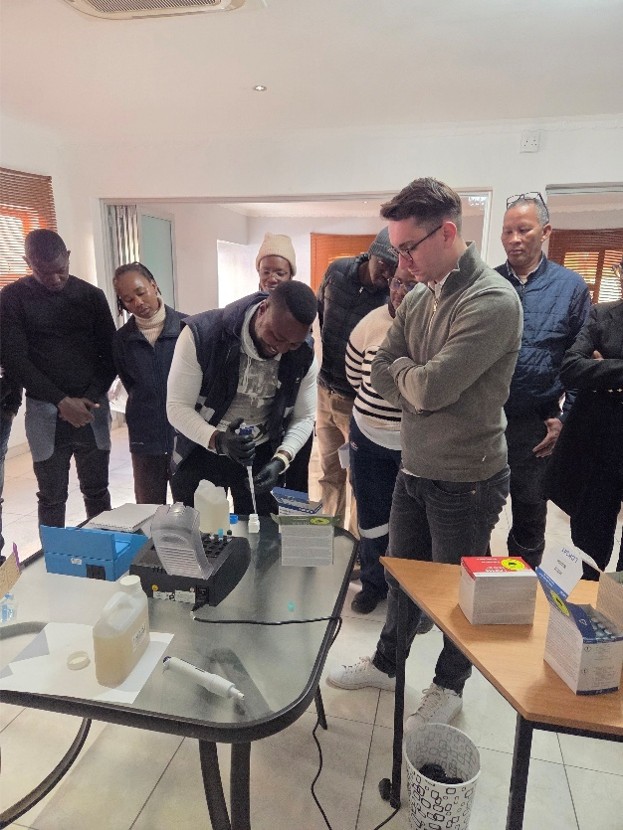
The whole training week was perceived as huge success from both participants and WaReNam partners. It was agreed upon between EGLV and NamWater HRDC that further training activities will be conducted in the country – within the WaReNam project period and beyond as part of their operator partnership.
Authors:
Dr.-Ing. Martin Zimmermann, Dr. Stephan Sander, Sophia Keller
For more information and details, please visit the WaReNam project website.
More information on all seven projects can be found here and in the programme publication.
