WaRisCo translates science into action for two of South Africa’s biggest climate change risks: mega-flooding in the greater Durban area and day-zero droughts in Johannesburg and the Gauteng Province. Recent months have brought stark reminders of how vulnerable these regions are to hydrological extremes.
In June 2025 more than 100 people lost their lives in severe flooding in the Mthatha area of the Eastern Cape, just south of Durban. The event was triggered by a cut-off low – the same weather system that caused the devastating Durban floods in April 2022. The Mthatha disaster once again highlighted the critical importance of WaRisCo’s work on climate-smart disaster management and flood risk adaptation in a warming climate.
At the same time, as we write this letter, parts of the Integrated Vaal River System (IVRS) that supplies Gauteng are facing flood risk – in contrast to January 2025, when the Vaal Dam was at only 20% storage capacity. This immense variability underscores the challenges of managing water security in a changing climate.
In recent months, WaRisCo has strengthened its research, widely shared new findings, continued its co-production process with stakeholders and enhanced its capacity-building activities:
Recent Findings Make Headlines
Recent novel research findings from WaRisCo have been featured in the press, including on wits.ac.za and in the Daily Maverick, highlighting that the catastrophic April 2022 floods in Durban can be formally attributed to climate change. WaRisCo research showed that the rainfall during the 11–12 April 2022 storm was 40–107% heavier than it would have been in a cooler climate with anthropogenic trends removed, emphasizing how global warming significantly amplified the disaster.
The Major of eThekwini welcomed the WaRisCo team’s finding in the joint press release issued by the City and WaRisCo.
Presenting WaRisCo at SASAS Conference
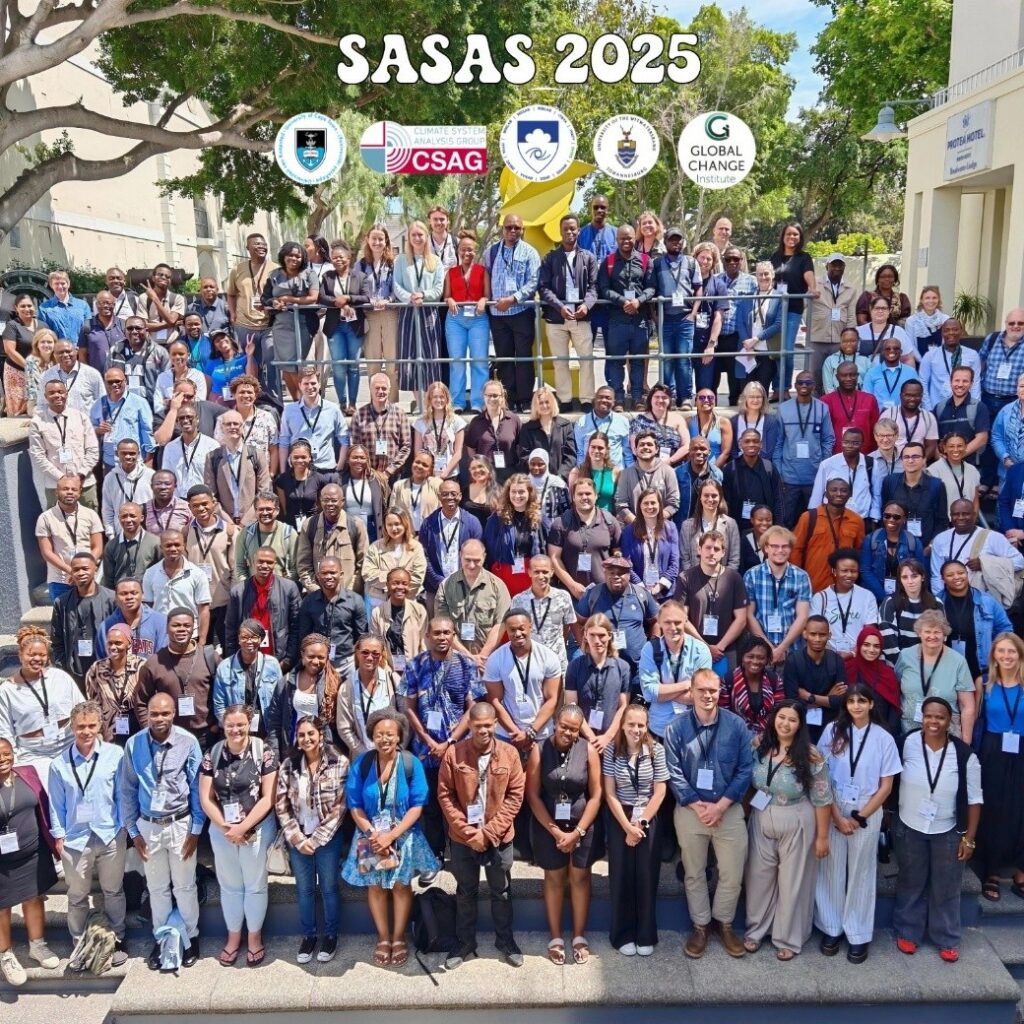
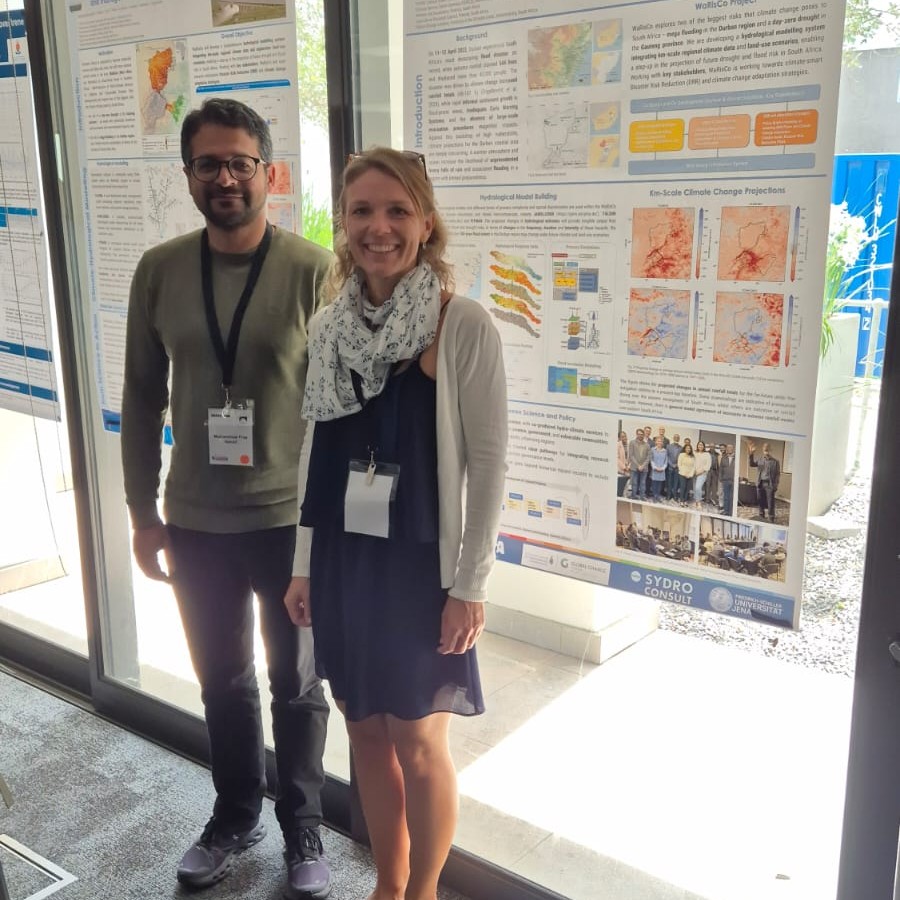
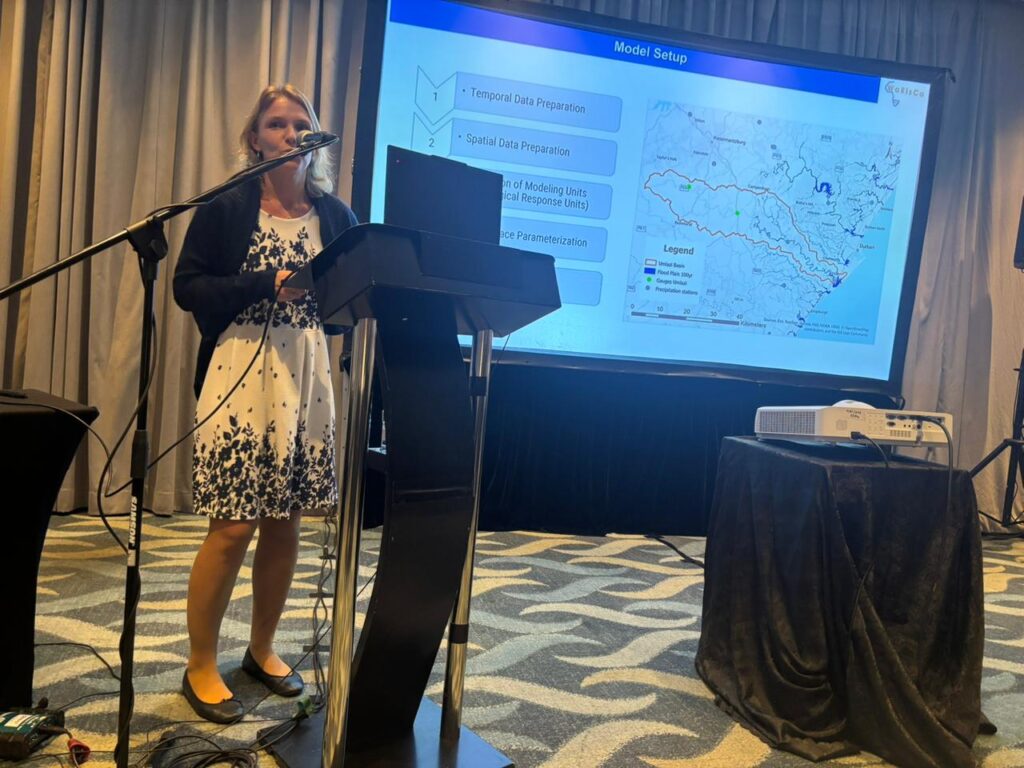
On 13–14 November 2025, the WaRisCo team attended the 39th Annual Conference of the South African Society for Atmospheric Science (SASAS) – Climate Science for Climate Action – in Cape Town. The conference brought together scientists, stakeholders, and practitioners to discuss the latest advances in climate science for Africa. WaRisCo had a strong presence with six presentations, showcasing our latest findings in climate and hydrological modelling:
- Biskop et al.: Towards climate-smart disaster planning for extreme flood risks in durban and surrounding regions.
- Engelbrecht et al.: The role of climate change in the Durban flood of April 2022.
- Ismail et al.: Critical role of hydrological extreme events in future water security and management of the Integrated Vaal River System.
- Weber et al.: Compound climate extremes and water security challenge in the Integrated Vaal River System and the Greater Durban region.
- Frisius et al.: Challenges in simulating precipitation using the convection permitting climate model REMO-NH in South Africa.
- Faso et al.: The dynamics of climate change impacts on flooding in Eastern South Africa, KwaZulu-Natal and Eastern Cape.
Building Regional Capacity
WaRisCo contributed to the WASA Summer School on Innovative Approaches to Improve Water Security (24–27 October, Lusaka, Zambia) by delivering a lecture on Climate Change Factsheets as a Climate Service in Southern Africa at Sub-National Levels. This included a group exercise on Co-Designing a Hydro-Climatic Factsheet, aimed at collaboratively defining the focus, structure, and intended use of a factsheet that communicates key trends, challenges, and implications of climate–water interactions in South Africa to better inform and support decision-making.
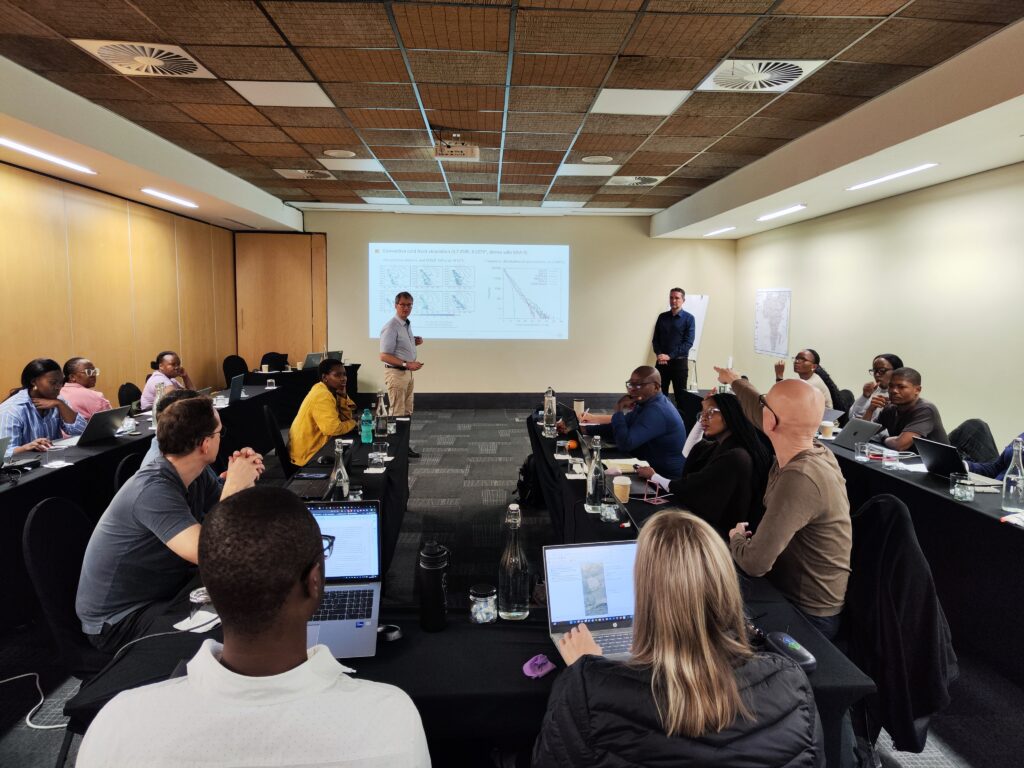
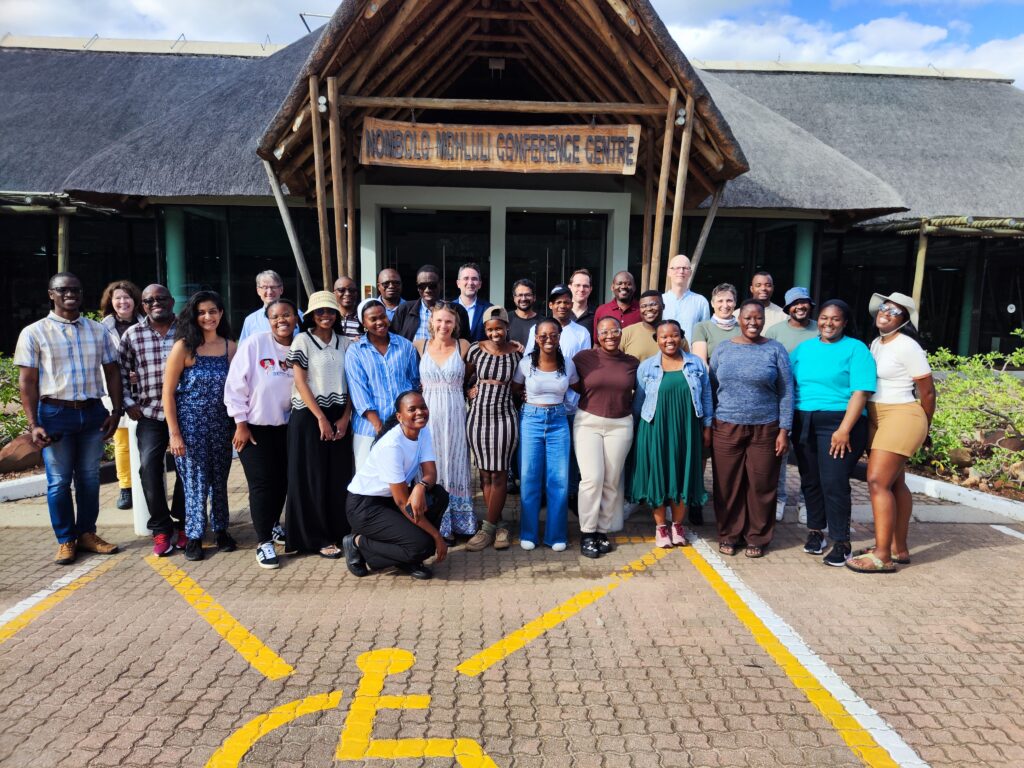
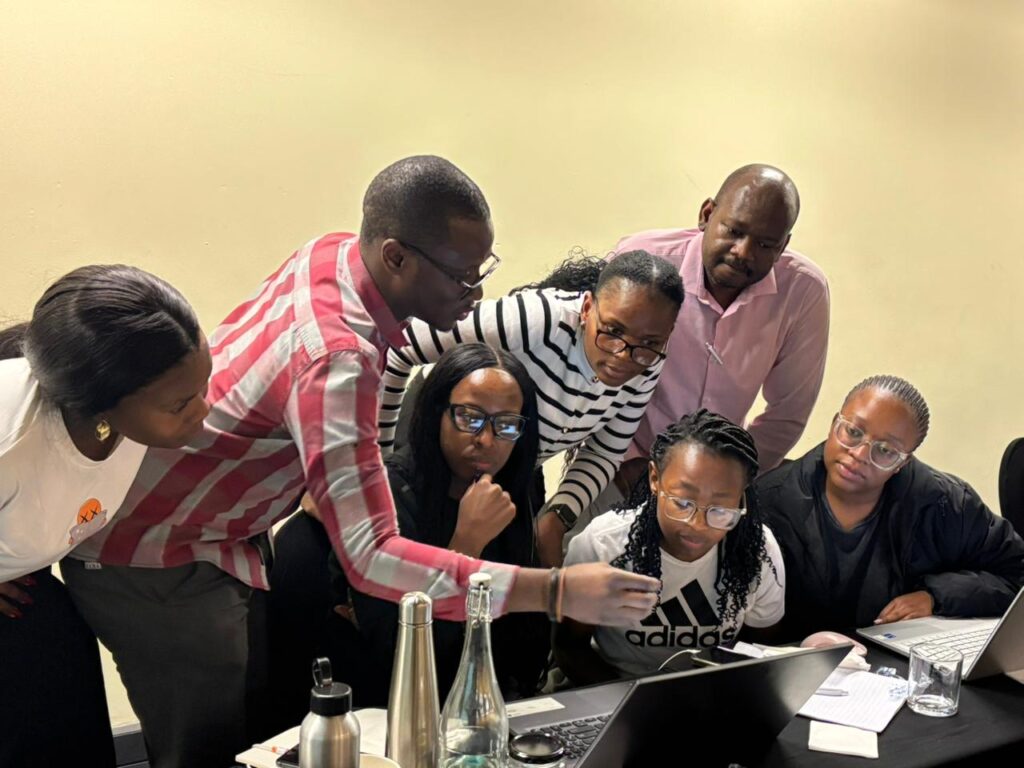
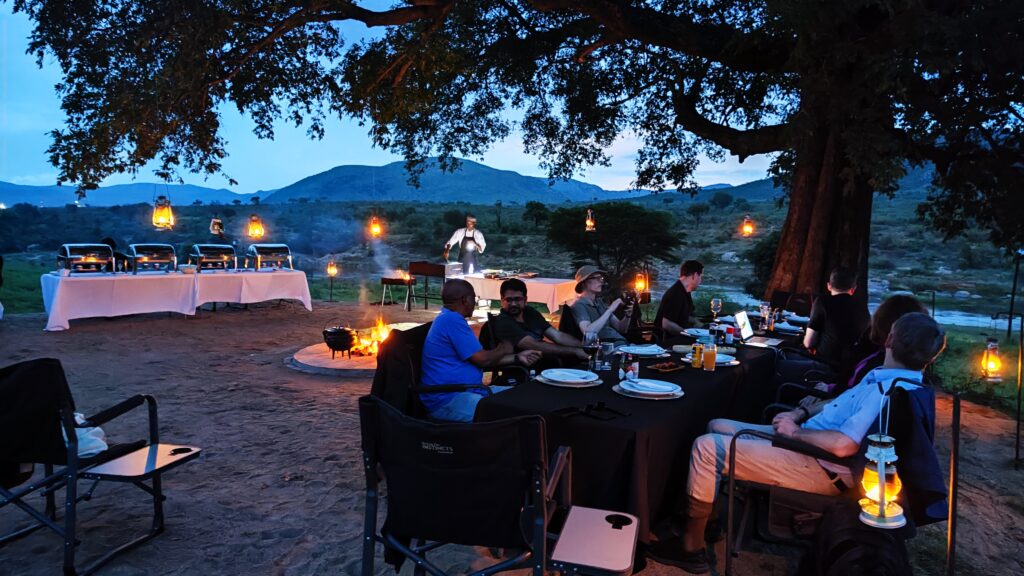
Moreover, WaRisCo hosted a three-day Summer School on Modelling Hydrological Extremes in a Changing Climate at Kruger National Park on 16-18 November 2025, bringing together 20 students from South Africa, Botswana, and Zambia. The school offered a unique opportunity to deepen theoretical understanding and build hands-on modelling skills related to climate and hydrological extremes in the region.
Participants gained:
- Understanding of modelling and data analysis tools
- Practical experience with climate and hydrological models
- Skills in handling NetCDF data and model ensembles
- Networking with regional and international experts
Training was provided on the following Software & Tools:
- Programming/Analysis: Python
- GIS & Visualization: QGIS
- Climate Models: CCAM, REMO
- Hydrological Models: JAMS-J2000, TALSIM, PITMAN
Annual WaRisCo Project Meeting
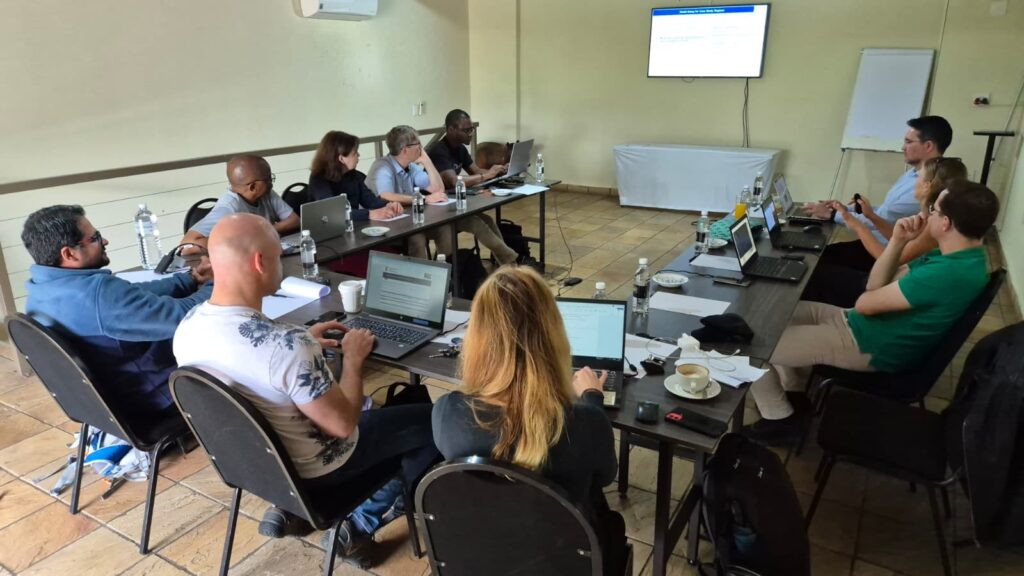
Immediately after the summer school, the team held a three-day annual project meeting in Malalane (19–21 November) to share scientific progress and chart the next phase of project activities.
WaRisCo has successfully produced the first km-scale projections of present-day climate variability and future climate change over South Africa’s Eastern Escarpment. These simulations can resolve convective rainfall over the steep topography, substantially improving the reliability of climate change projections for the region.
CMIP6 land-use data for South Africa have been analysed, and all relevant data sets have been compiled to develop more detailed future land-use scenarios. Key land-use drivers have been identified, and initial LUMCC storylines have been drafted for further refinement with stakeholders.
First-order hydrological models have been established for IVRS, which supplies Gauteng, as well as for the uMngeni and uMlazi catchments, which are critical for understanding flood risks in Durban. With strong support from stakeholders, operating rules and abstraction data have been obtained, enabling well-calibrated models of these highly engineered systems.
Meaningful Stakeholder Engagements in Durban and Pretroria
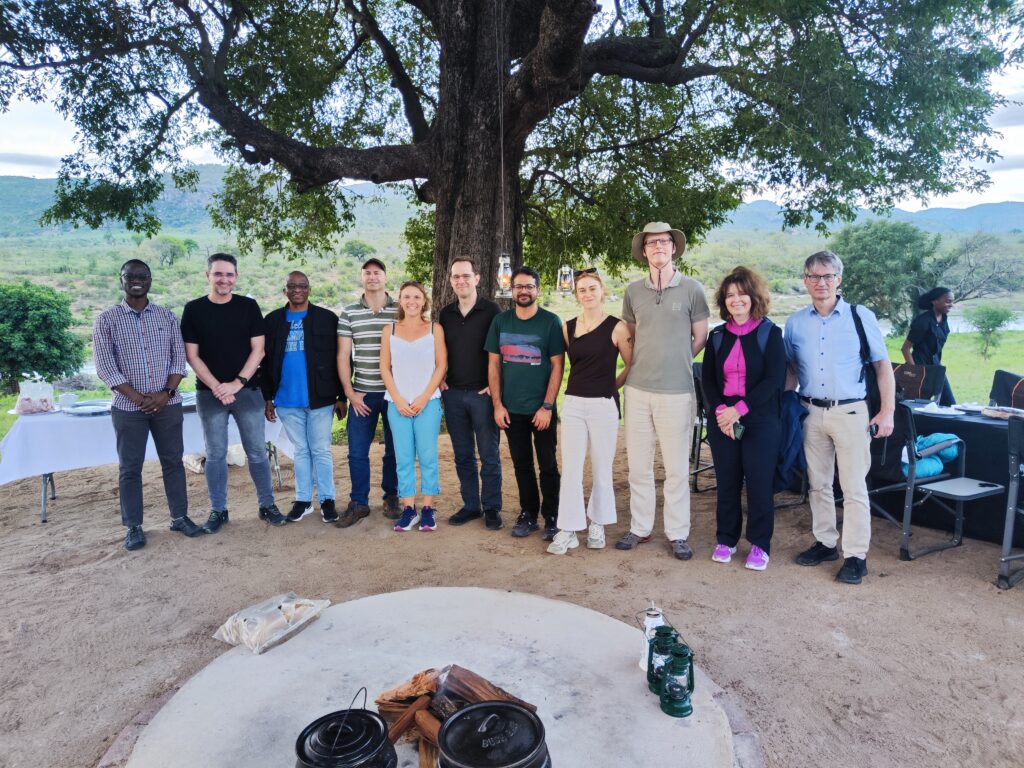
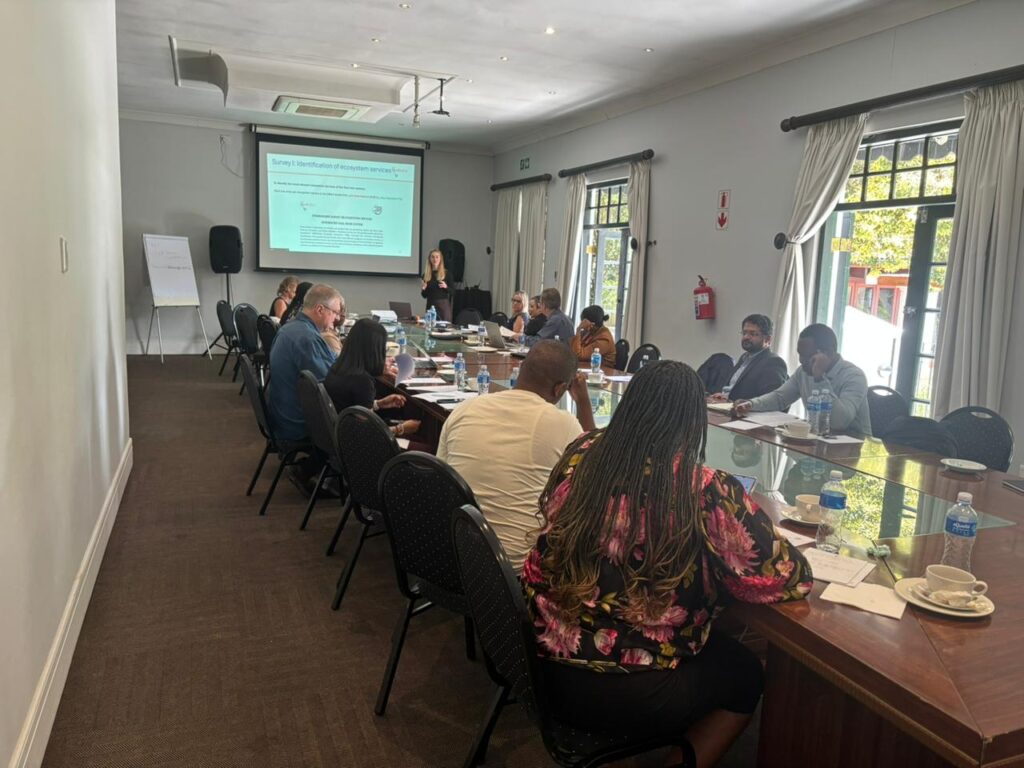
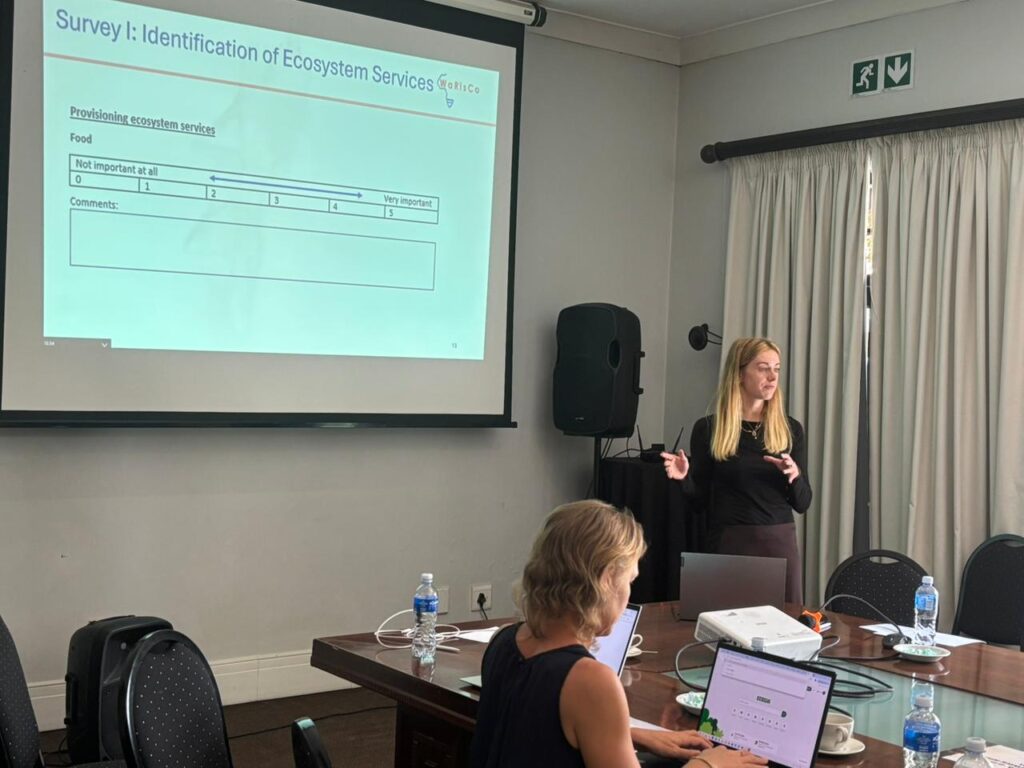
Following the annual project meeting, we engaged stakeholders in Durban (24-25 November 2025) and Pretoria (27-28 November 2025).
In Durban, the WaRisCo team met with officials and experts of the City of eThekwini to discuss future land-use patterns in the KwaZulu-Natal Province, supporting the development of the WaRisCo land-use scenarios.
The team also held detailed discussions with the City on hydrological modelling of flood risks — including flood-line assessments — and explored how WaRisCo’s modelling efforts and the City’s operational flood-forecasting system can mutually reinforce one another.
A particular highlight was reconnecting with the Durban Coalition, an NGO working directly with local communities on emergency flood early-warning systems. Through this collaboration, WaRisCo has established a direct pathway for the uptake of its research within some of eThekwini’s most vulnerable communities.
In Pretoria, the WaRisCo team met with the Department of Water and Sanitation (DWS), the Department of Agriculture, and the Department of Forestry, Fisheries and the Environment to advance the development of land-use scenarios for the IVRS. Additional meetings were held with SASOL to discuss water allocations in the IVRS, and with the hydrological consulting company WRP (working on behalf of DWS) to exchange insights on dam-yield modelling.
Authors:
Dr. Sophie Biskop, Dr. Chris Moseki and Prof. Francois Engelbrecht
For more information and details, please visit the WaRisCo project website.
More information on all seven projects can be found here and in the programme publication.