
PhD students are at the heart of the seven collaborative research projects within the Water Security in Africa (WASA) programme, driving innovation in water supply and wastewater management while advancing solutions for water security under the pressures of climate change. For doctoral researchers, WASA offers not only the opportunity to conduct meaningful research, but also to contribute directly to solving real-world challenges. In addition, the programme provides a range of training and networking opportunities, including formats such as the WASANet Summer School.
A new initiative further strengthens this exchange: a meeting series created specifically to foster the exchange between PhD researchers within the WASA programme. In this interview, Florian Blum, researcher in the WaMiSAR project and coordinator of the new meeting series, shares insights into the vital role of PhD students for the research projects, the opportunities offered by WASA, and concrete ways to collaborate and exchange knowledge.
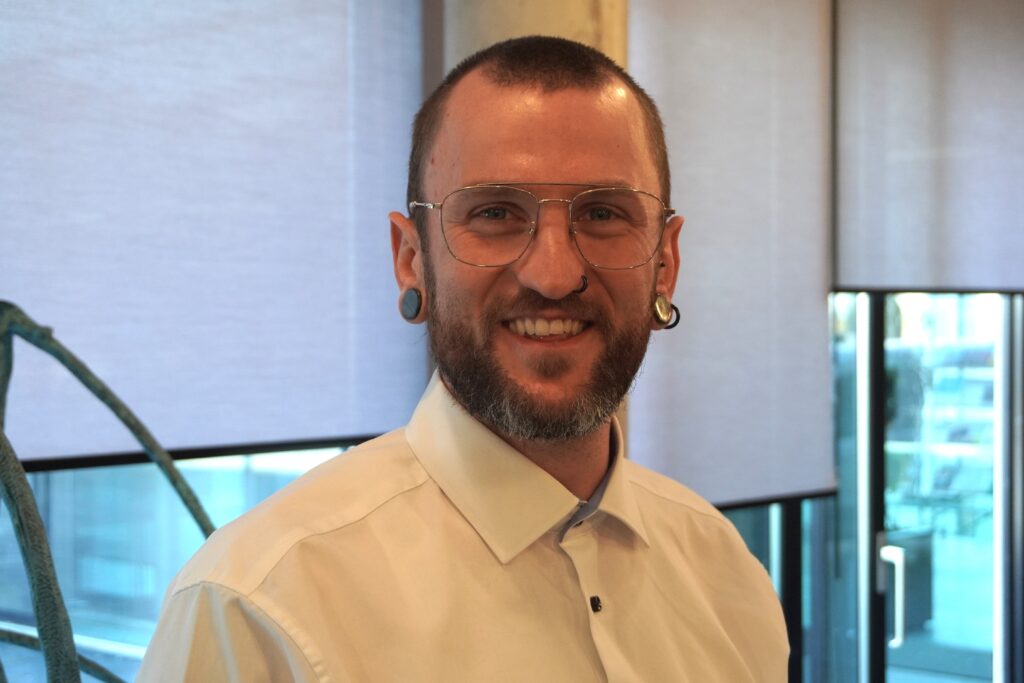
Thank you for taking the time to do this short interview, Mr. Blum. Could you briefly introduce yourself and your research?
My name is Florian Blum. I am a 30-year-old PhD researcher currently based in Munich, Germany. I work at Hydroisotop GmbH and am part of the WaMiSAR project. My research focuses on characterising nature-based materials, such as bentonite and zeolite, for their application in passive mine water treatment.
PhD candidates within the Water Security in Africa (WASA) programme play an important role. From your perspective, what are PhD students contributing to advancing research on water security in Africa?
At this stage, I can mainly speak for the WaMiSAR project, as I am not yet closely involved in the other projects. In our case, PhD students play a key role in its success, as they have the time capacity needed to carry out both fieldwork and laboratory work and to generate the data required.
Last year, you participated in the first WASA Summer School at the WaterNet Conference in Lusaka. Could you please describe your experience?
For me, it was quite a unique experience. Although I joined the 15-day WASA Summer School only for the final four days, I was immediately warmly welcomed by an open community of young scientist from all around the SADC region, who really swept me along with their energy and enthusiasm.
From an educational perspective, I particularly appreciated the approach of having project partners deliver lectures for the next generations, utilising the existing expertise within the projects while also strengthening connections between them.
What opportunities does WASA offer for PhD candidates, for example in terms of collaboration, networking, or field research?
As mentioned before, the summer schools offer excellent networking opportunities for PhD students. In addition, regular webinars are being established, and funding opportunities are available – for example to attend conferences.
From March 2026 on, PhD researchers in WASA will self-organise regular online meetings. What was the motivation behind creating this format? Do you already have a list of topics to be discussed in these meetings?
With the online meeting series, we want to strengthen connections between the projects and to enhance collaboration among young scientists. Prior to our first meeting this week, I created an online survey to gain a broad overview of research topics, as well as the participants’ needs and challenges. Based on the results, we plan to organise method workshops and skill sessions. Furthermore, we aim to create a platform for presenting and discussing manuscripts. During the next meeting, everyone will have the opportunity to give a short elevator pitch on their PhD topic to identify potential synergies and form focus groups.
What do you personally hope participants will gain from taking part in the meeting series?
Our goal is to foster a supportive environment where participants encourage one another, feel comfortable asking for help when needed, and celebrate each other’s achievements as they successfully and confidently complete their PhDs.
The date for the next PhD meeting will be published shortly in the events calendar on the WASA website.