
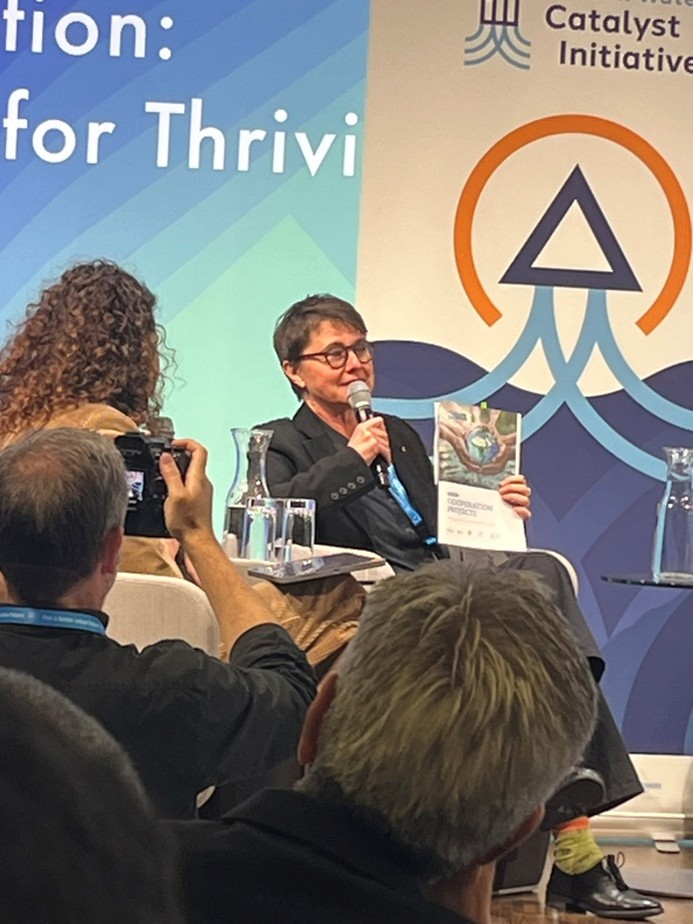
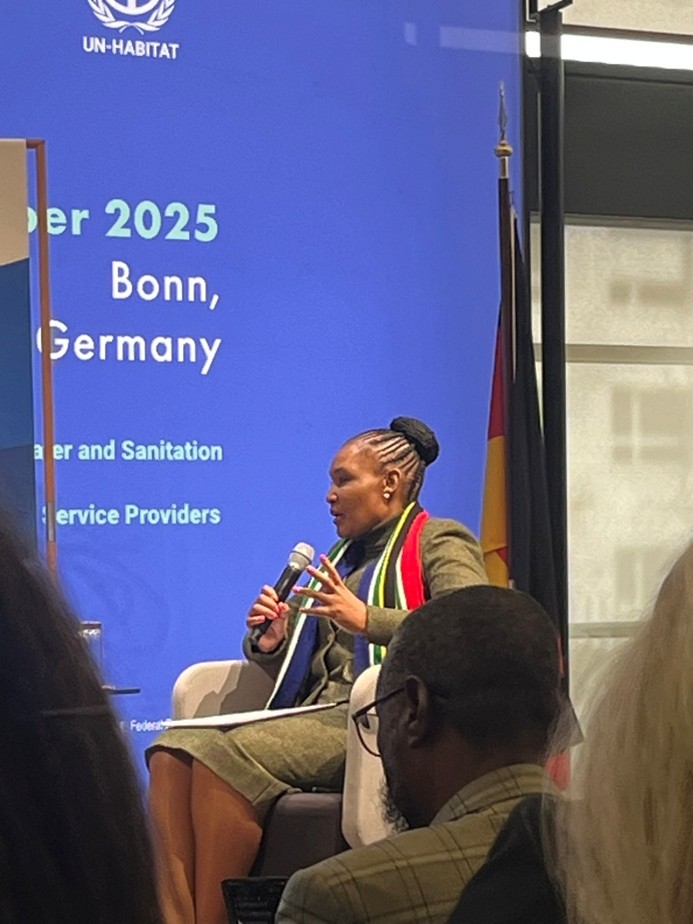
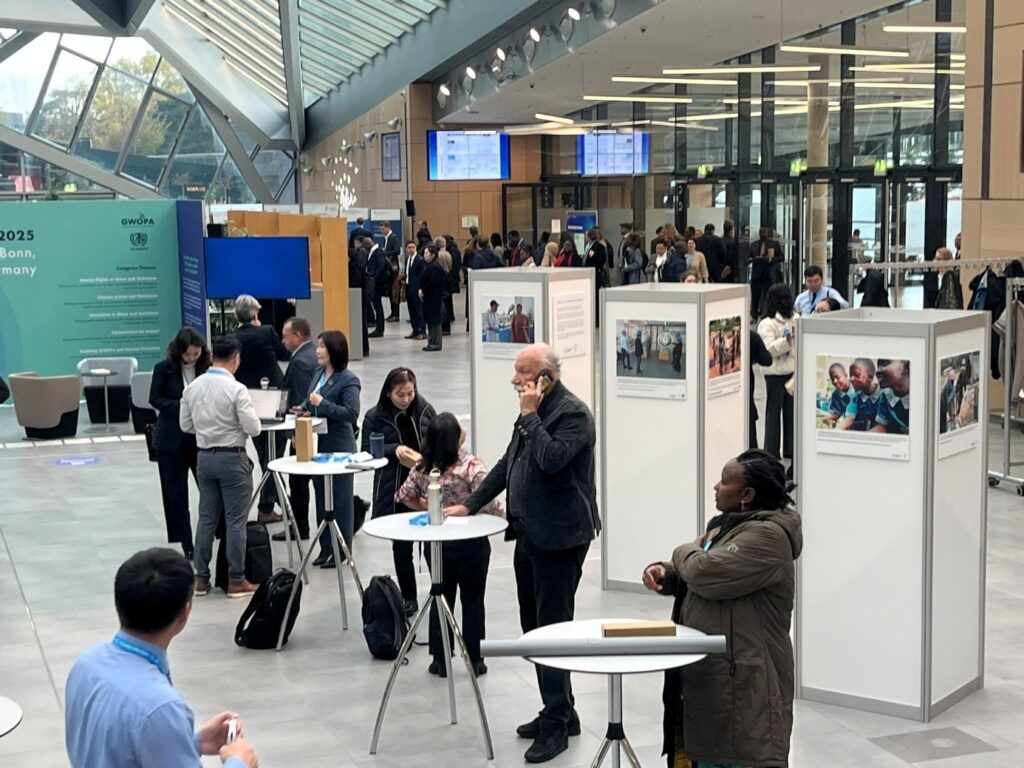
Water Security in Africa (WASA) participated in the 6th Global Water Operators’ Partnerships Alliance (GWOPA) Congress, held from 27–30 October 2025 in Bonn. With many Water Operators’ Partnerships (WOPs) taking place across Africa, the Congress offered a valuable opportunity to engage with utilities directly involved in capacity-building and service improvement on the continent. German–African operator partnerships are coordinated through the GIZ “Utility Platform” project, implemented with the involvement of German Water Partnership (GWP)—providing a structured framework for collaboration that closely aligns with the objectives of the WASA research programme. Bringing together almost 550 participants from more than 70 countries, the Congress offered an important platform for scientific initiatives to connect with water and sanitation operators, financing institutions and development partners.
NEU-Water Showcases Research–Operator Collaboration
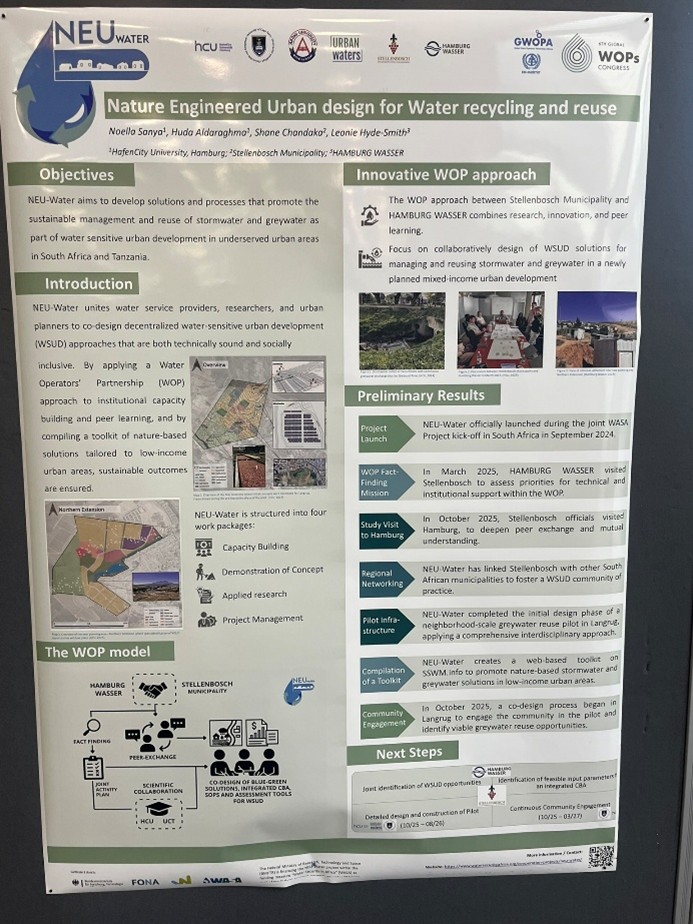
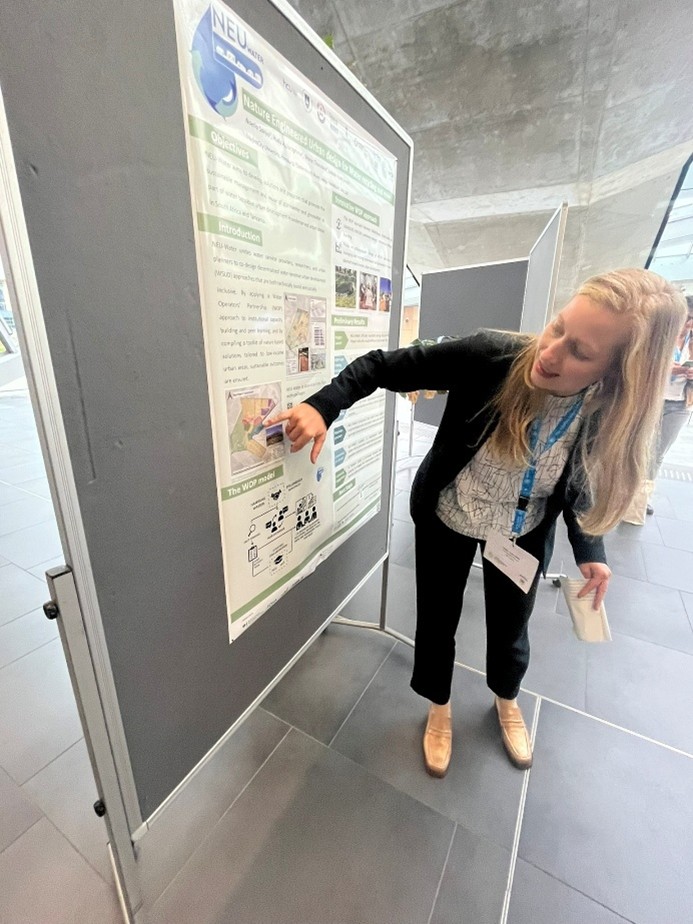
The NEU-Water project was represented by Dr. Leonie Hyde-Smith, who presented the operator partnership between Hamburg Wasser and Stellenbosch Municipality. The collaboration illustrates how research and utility practice can reinforce each other in developing context-appropriate solutions for water security. Dr. Hyde-Smith also contributed to the poster exhibition, sharing insights on research activities, data approaches and pilot applications.
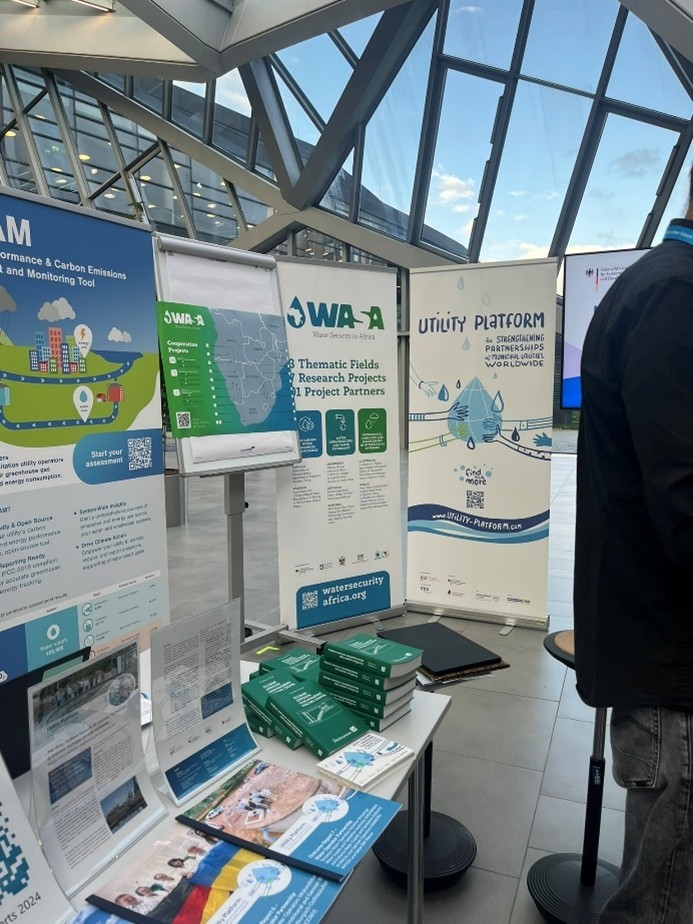
WASANet Engages with African Operators and Partners
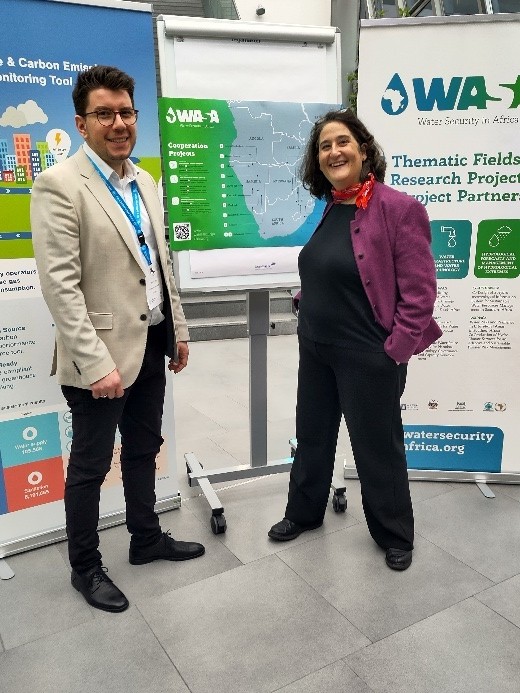
WASANet was featured in the exhibition area, represented by Marie-Louise Chagnaud (German Water Partnership). She engaged with African water operators and regulators, e.g. RAND Water, South Africa, Sambia as well as with KfW and the European Commission, exploring how research projects can support operational challenges and how utilities can contribute to scientific development. These exchanges highlighted strong interest in research-driven approaches to climate resilience, digitalisation and service improvement.
Peer Learning, Innovation and Financing
A central moment of the Congress was the session “Unlocking Peer Learning Alongside Financing: Scaling Water and Sanitation as Public Services.” Representatives from major development banks and the European Commission highlighted the potential of Water Operators’ Partnerships (WOPs) and Sanitation WOPs (SWOPs) to link technical and organisational improvements with investment readiness.
For the WASA projects, these discussions underscored that innovation, capacity building and financing must be connected to successfully move research into practice—particularly when developing technologies, tools and frameworks that need operational testing and long-term adoption by utilities.

Looking Ahead: New Opportunities for WASA Projects
The Congress demonstrated clear potential for the WASA projects to expand cooperation with African water and sanitation authorities. Conversations with operators and partners revealed strong interest in:
- technology testing in real-world utility environments,
- technology uptake through pilots and early adoption pathways,
- joint field activities with research teams,
- dissemination and knowledge exchange within operator networks,
- and co-creation of tools and methods to advance water security and climate resilience.
These opportunities strengthen the role of WASA as a research programme that not only generates knowledge, but also contributes to practical solutions.
As the sector prepares for the UN 2026 Water Conference, the Congress served as an important milestone in positioning research as an essential partner in improving water and sanitation services. The next GWOPA Congress in 2027—date to be announced—will offer further opportunities for WASA projects to present their progress and deepen the dialogue with water operators, development partners and financing institutions.
Learn more about
NEU-Water: https://www.watersecurityafrica.org/cooperation-projects/neu-water/
GWOPA and the congress: https://gwopa.unhabitat.org/wop-congress/
WASA Engagement Opportunities: https://www.watersecurityafrica.org/event/