
The Co-Design of Hydrometeorological Information System for Sustainable Water Resource Management in Southern Africa (Co-HYDIM-SA) project is tackling a critical regional challenge: the need for effective hydrometeorological early warning and information systems (EWIS). The initiative focuses on strengthening water resource management and improving water security in northern Namibia and southern Angola. At the heart of the project is the development of the Cuvelai Basin Early Warning and Information System (CUVEWIS), a tool designed to deliver timely and reliable information to support sustainable water management across the basin. CUVEWIS is being developed through a co-design approach, ensuring that it meets the needs of stakeholders and decision-makers on the ground.
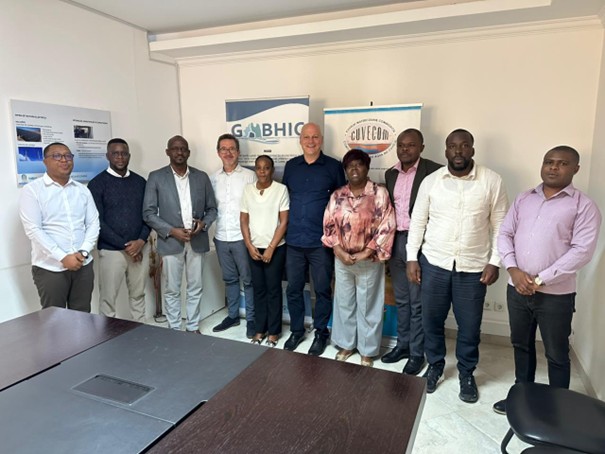
In line with this collaborative principle, the Co-HYDIM-SA project team, together with the Enhanced Water Security and Community Resilience in the Adjacent Cuvelai and Kunene Transboundary River Basins (CUVKUN) project, a key partner in CUVEWIS development, and the Cuvelai Watercourse Commission (CUVECOM), the transboundary river basin body responsible for the Cuvelai, conducted a series of stakeholder engagements in Luanda, Angola, from 25 to 27 February 2026. Meetings were held with key national institutions, including the Instituto Nacional de Recursos Hídricos (INRH), the Gabinete para Administração das Bacias Hidrográficas do Cunene, Cubango e Cuvelai (GHABIC), the Instituto Nacional de Meteorologia e Geofísica (INAMET), the Gabinete de Gestão do Programa Espacial Nacional (GGPEN), the Ministry of Telecommunications, Information Technologies and Social Communication (MINTTICS), and Empresa Pública de Produção de Electricidade (PRODEL). These institutions play a vital role in Angola’s early warning ecosystem and are essential partners in the successful implementation of CUVEWIS. The engagement process continued with a virtual meeting held on 5 March 2026 with the Climate Change Division of the Ministry of Environment.
The meetings achieved their key objectives, including gaining a better understanding of the status of CUVEWIS development and soliciting input from stakeholders. Institutional roles and responsibilities were agreed upon, locations of hydrometeorological stations were identified, and commitments were made to share available data. Subseasonal forecasting techniques were also presented, with INAMET already accessing daily updated forecasts and further engagement planned to optimise their use. The project’s Principal Investigator, Prof. Dr. Andreas Fink, who led the project team, said, “This mission was a vital and successful one that ensures not only that the development of CUVEWIS is tailored to the local needs of people in the transboundary Cuvelai Basin, but also that it remains sustainable beyond the project’s end in April 2028 due to the strong aspect of local ownership.”
Key events information for 2026
- Stakeholder engagement workshops:
- Early June 2026 in Namibia08-09 October 2026 in Gaborone, Botswana
- 12-14 October 2026 in Ondjiva, Angola
- Annual project meeting, 12-14 October in Ondjiva, Angola
Author:
Prof. Dr. Andreas H. Fink, Dr. Simon Ageet
For more information and details, please visit the CO-HYDIM-SA project website.
More information on all seven projects can be found here and in the programme publication.
