As part of the Water Operators’ Partnership (WOP) component of the NEU-Water project, HAMBURG WASSER hosted a delegation from Stellenbosch Municipality for a study visit in Hamburg, jointly organized with HafenCity University (HCU). Representatives from George Municipality, the City of uMhlathuze, GIZ South Africa, and the Future Water Research Institute at the University of Cape Town also joined the delegation—further deepening connections for future cooperation and knowledge exchange within South Africa’s growing community of practice.
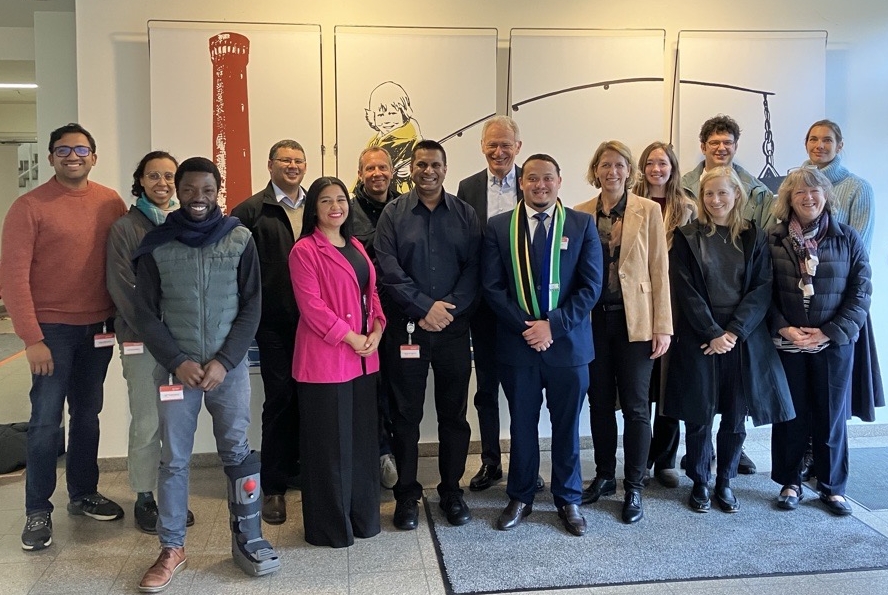
The program combined expert input with hands-on activities focused on water-sensitive urban development (WSUD), blue–green infrastructure, and cloudburst preparedness. Participants explored key initiatives such as Hamburg’s Rainwater Infrastructure Adaptation (RISA) measures and the “Blue-Green Streets” project, alongside discussions on management and financing approaches, including the city’s stormwater fee. A central theme throughout the visit was how WSUD can be more effectively integrated into urban planning and implementation.
Complementing the discussions, several excursions provided practical insights into local solutions. Highlights included visits to RISA measures on schoolyards, decentralized stormwater treatment using retention soil filters, multifunctional stormwater retention systems at a sports facility, a green roof testing site, and nature-based greywater treatment solutions for households and institutions. The program concluded with a tour of Hamburg’s Köhlbrandhöft wastewater treatment plant.


Looking ahead, the project is also advancing its community engagement and co-design activities in South Africa and Tanzania. The first phase of the engagement process in Franschhoek has already taken place, including public sessions, workshops, guided site visits, and a co-researcher program with local youth. A full report—together with insights from the research stay in Tanzania—will be featured in our next newsletter!
Author:
Ajith Edahoot
For more information and details, please visit the NEU-Water project website.
More information on all seven projects can be found here and in the programme publication.